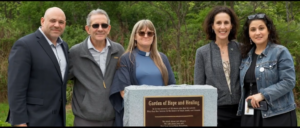
Dr. Rodda addressed those in attendance at the International Survivors of Suicide Loss Day with these inspirational thoughts:
Today we gather to honor lives touched by suicide and to support one another as we navigate the quiet, often difficult journey of grief. International Survivors of Suicide Loss Day is a chance to acknowledge a truth that can be hard to name: grief is personal, complex, and uniquely our own.
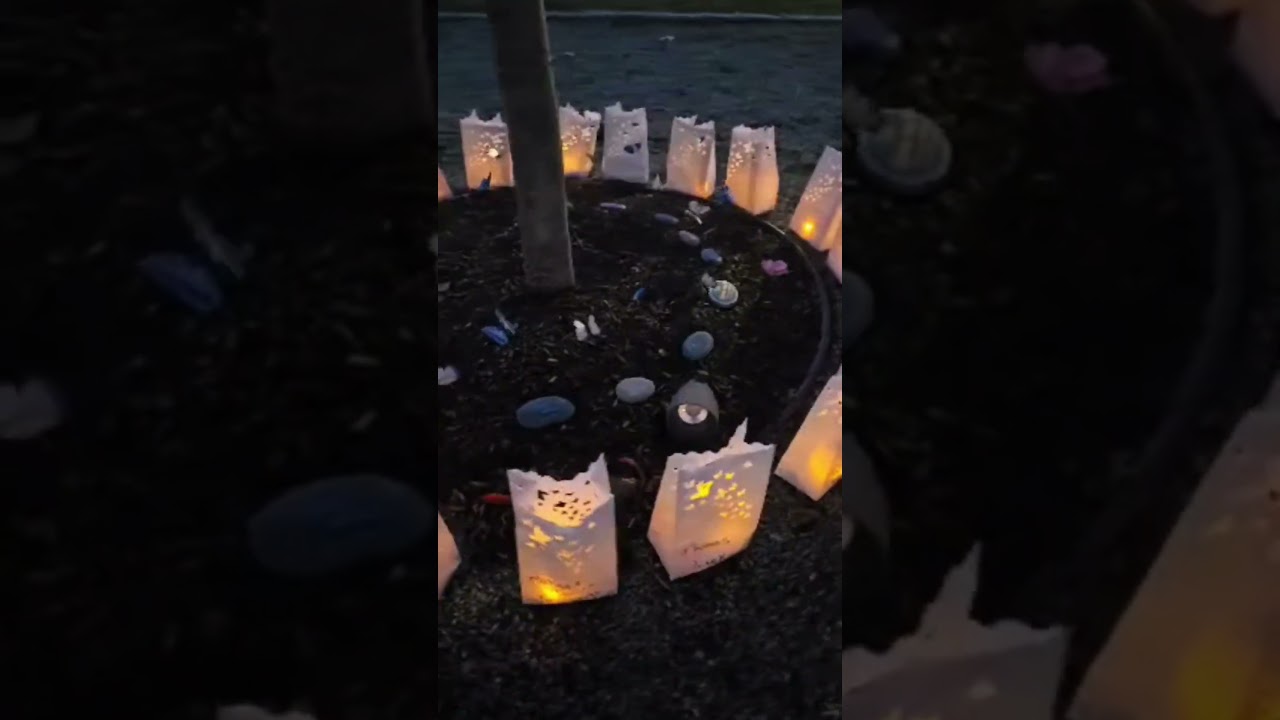
To those in attendance who carry the weight of loss in your own way, I want you to know this: there is no right or wrong pattern to grief. There is no timeline, no checklist, no “one-size-fits-all” map. Grief shows up differently for each of us, and that is not a sign of weakness or a failure to “move on.” It is a testament to the depth of what we loved and the impact of what was lost.
Our individual journeys may include moments of quiet sorrow, bursts of anger, sudden laughter, or a day that feels like moving through molasses. Some days may bring a sense of closeness to the person who died, others a sense of distance or numbness. Some may seek solace in memories, others in new routines, and some may feel held by faith, by science, by community, or by stillness. All of these experiences are valid. All are part of healing.
We also acknowledge that grief often travels with other emotions—confusion, guilt, anger, relief, relief interwoven with sorrow. We may worry that our feelings are too “heavy” for others to bear. I want to say plainly: your feelings are real, they are yours, and they deserve space, time, and care.
In this moment, we stand together to offer three commitments to one another:
– First, to listen with patience and without judgment. Your story matters, and your words deserve to be heard exactly as you share them.
– Second, to honor boundaries and pace. There is power in choosing when to share, when to pause, and when to seek help. Your pace is the right pace.
– Third, to extend hope without pressure. Hope may look like a small breath, a moment of connection, or a decision to seek support. It is enough that you continue to show up for yourself and for the people who matter to you.
Let us also remember that healing does not mean forgetting. It means learning to carry memories with tenderness, integration, and meaning. It means building a life in which the love you hold for the person who died continues to shape your choices, your compassion, and your resilience.
To the families, friends, partners, and communities who have been left behind: you are not alone. Your pain is real, and your resilience is real. It takes courage to face a world that still carries your loved one in invisible ways—through photos tucked into a wallet, a song that won’t end, a scent that triggers a memory, a story you tell again and again with different listeners. May you find gentle reminders that you are seen, you are heard, and you are valued.
To those who are still healing in their own way, and to those who support them—caring for ourselves is an act of love. If today feels heavy, that is a normal part of the process. If today feels hopeful, that is also part of the process. Neither negates the other.
As a community, let us strengthen our bridges of understanding: to reach out in small, meaningful ways; to check in with a simple message; to offer a seat, a cup of tea, a listening ear, or the space to cry, to laugh, to rest. Let us reduce stigma so that seeking help—whether through friends, family, counselors, support groups, or professional care—becomes a sign of strength, not a burden.
Finally, I want to leave you with this: your grief is a thread that connects you to a larger story of humanity. It is a testament to the love you carried and continue to carry. It is a beacon reminding us to show compassion, to be present, and to build communities where every loss is acknowledged, every voice is respected, and every path toward healing is honored.
Thank you for the courage you bring to this day. Thank you for the care you extend to others. And thank you for the ongoing light you carry, even on the days it feels hardest to find.
If you or someone you know is hurting right now, please reach out to a trusted person, a local helpline, or a mental health professional. You deserve support, and you deserve the chance to heal.
Together, we remember. Together, we heal. Together, we move forward—with empathy, with dignity, and with hope.
Dr. Mary Rodda